Read More
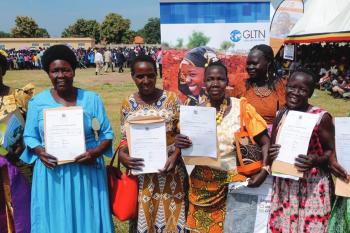
Gender Strategy for Land-at-Scale Uganda
Women’s Land Rights (WLRs) are fundamental human rights, foundational to gender equality and women’s dignity and instrumental in improving food security, effective climate action, poverty eradicati

This Policy Guide provides policy-makers with the necessary knowledge about the challenges and rights of Indigenous peoples in relation to land and property in the urban context. The Guide sets out how to secure land rights of Indigenous peoples in cities through a human rights framework in the context of urbanization, including migration and urban expansion.
This Policy Guide to Secure Land Rights for Indigenous Peoples in Cities builds on earlier guides and is part of a series of UN-HABITAT handbooks focused on the rights of Indigenous peoples. The first policy guide entitled, “Housing Indigenous Peoples in Cities: Urban Policy Guides for Indigenous Peoples” was published in 2009, followed by a report entitled, Urban Indigenous Peoples and Migration: A review of Policies, Programmes and Practices, published in 2010 and launched at the Fifth Session of the World Urban Forum in Rio de Janeiro.
Women’s Land Rights (WLRs) are fundamental human rights, foundational to gender equality and women’s dignity and instrumental in improving food security, effective climate action, poverty eradicati
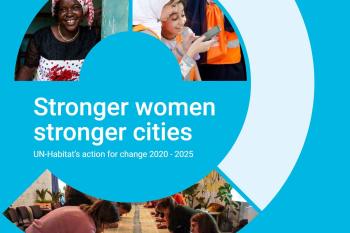
This publication presents a summary of UN-Habitat’s gender equality impact over the past five years, in line with the Beijing reporting cycle.
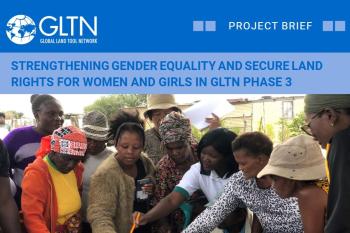
GLTN’s institutional commitment to gender equality and secure land rights for women and girls has been at the core of its work since inception in 2006.