Read More
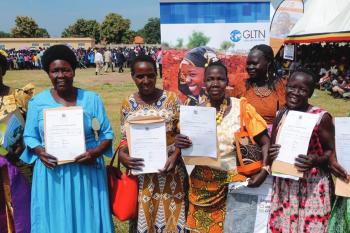
Gender Strategy for Land-at-Scale Uganda
Women’s Land Rights (WLRs) are fundamental human rights, foundational to gender equality and women’s dignity and instrumental in improving food security, effective climate action, poverty eradicati
More than 50 percent of the global population resides in urban areas where land policy and infrastructure interactions facilitate economic opportunities, affect the quality of life, and influence patterns of urban development. While infrastructure is as old as cities, technological changes and public policies on taxation and regulation produce new issues worthy of analysis, ranging from megaprojects and greenhouse gas emissions to involuntary resettlement. This volume, based on the 2012 seventh annual Land Policy Conference at the Lincoln Institute, brings together economists, social scientists, urban planners, and engineers to discuss how infrastructure issues impact low-, middle-, and high-income countries.
Women’s Land Rights (WLRs) are fundamental human rights, foundational to gender equality and women’s dignity and instrumental in improving food security, effective climate action, poverty eradicati
This publication presents a summary of UN-Habitat’s gender equality impact over the past five years, in line with the Beijing reporting cycle.
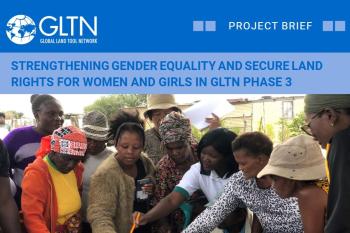
GLTN’s institutional commitment to gender equality and secure land rights for women and girls has been at the core of its work since inception in 2006.