Read More
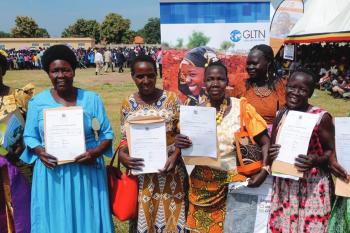
Gender Strategy for Land-at-Scale Uganda
Women’s Land Rights (WLRs) are fundamental human rights, foundational to gender equality and women’s dignity and instrumental in improving food security, effective climate action, poverty eradicati
This paper examines land tenure systems and legal frameworks in Asia, and the current major debates around processes of land reform and justice for poor land users. It sets today’s systems in their historical context, tracing their roots back to regimes imposed by colonising powers, mainly European, over a 450-year period. Colonial governance focused first on trade but then evolved to encompass land as a commodity and a source of revenue, with increased concentrations of ownership. Following World War II, many newly independent countries in the region-initiated processes of land reform, which played an important part in state building. However, these efforts met with very different degrees of success, determined by individual country conditions and their historical legacies.
Women’s Land Rights (WLRs) are fundamental human rights, foundational to gender equality and women’s dignity and instrumental in improving food security, effective climate action, poverty eradicati
This publication presents a summary of UN-Habitat’s gender equality impact over the past five years, in line with the Beijing reporting cycle.
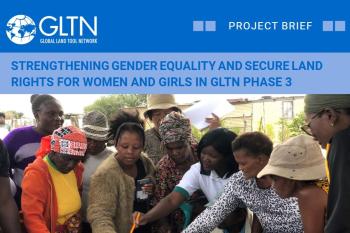
GLTN’s institutional commitment to gender equality and secure land rights for women and girls has been at the core of its work since inception in 2006.