Read More
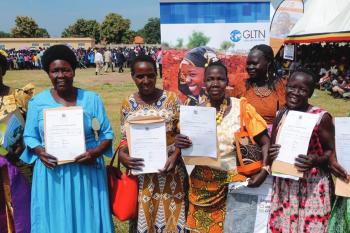
Gender Strategy for Land-at-Scale Uganda
Women’s Land Rights (WLRs) are fundamental human rights, foundational to gender equality and women’s dignity and instrumental in improving food security, effective climate action, poverty eradicati
The International Land Coalition (ILC) seeks to secure equitable access to land and resources for the rural poor through advocacy, knowledge management, networking, capacity building, and dialogue. Indigenous peoples comprise more than 370 million people worldwide. It is estimated that they constitute approximately 5% of the world's population, but make up 15% of the world's poor and about one-third of the world's 900 million extremely poor rural people (DESA, 2009: 21). Indigenous peoples have strong spiritual, cultural, social and economic relationship with their traditional lands, but their land rights are often the most precarious.
Women’s Land Rights (WLRs) are fundamental human rights, foundational to gender equality and women’s dignity and instrumental in improving food security, effective climate action, poverty eradicati
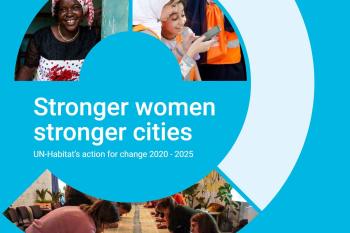
This publication presents a summary of UN-Habitat’s gender equality impact over the past five years, in line with the Beijing reporting cycle.
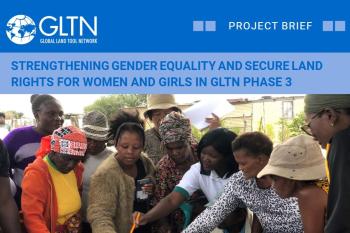
GLTN’s institutional commitment to gender equality and secure land rights for women and girls has been at the core of its work since inception in 2006.