
Read More
Gender Strategy for Land-at-Scale Uganda
Women’s Land Rights (WLRs) are fundamental human rights, foundational to gender equality and women’s dignity and instrumental in improving food security, effective climate action, poverty eradicati
A guide to support the implementation of the Voluntary Guidelines on the Responsible Governance of Tenure of Land, Fisheries and Forests in the Context of National Food Security
The FAO Governance of Tenure Technical Guides are part of FAO’s initiative to help develop capacities to improve tenure governance and thereby assist countries in applying the Voluntary Guidelines on the Responsible Governance of Tenure of Land, Fisheries and Forests in the Context of National Food Security. The FAO Governance of Tenure Technical Guides are prepared by technical specialists and can be used by a range of actors. They:
This guide on Governing Tenure Rights to Commons aims to support states, community-based organizations, civil society organizations, the private sector and other relevant actors, to take proactive measures to implement the standards and recommendations of the Voluntary Guidelines on the Responsible Governance of Tenure of Land, Fisheries and Forests in the Context of National Food Security (the Guidelines). The goal is to achieve legal recognition and protection of tenure rights to commons and community-based governance structures. For more information on the Guidelines and FAO’s activities on governance of tenure visit: www.fao.org/nr/tenure.
Women’s Land Rights (WLRs) are fundamental human rights, foundational to gender equality and women’s dignity and instrumental in improving food security, effective climate action, poverty eradicati
This publication presents a summary of UN-Habitat’s gender equality impact over the past five years, in line with the Beijing reporting cycle.
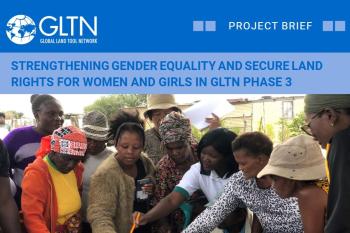
GLTN’s institutional commitment to gender equality and secure land rights for women and girls has been at the core of its work since inception in 2006.