Read More
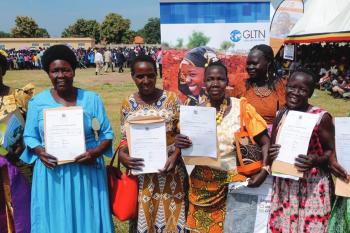
Gender Strategy for Land-at-Scale Uganda
Women’s Land Rights (WLRs) are fundamental human rights, foundational to gender equality and women’s dignity and instrumental in improving food security, effective climate action, poverty eradicati
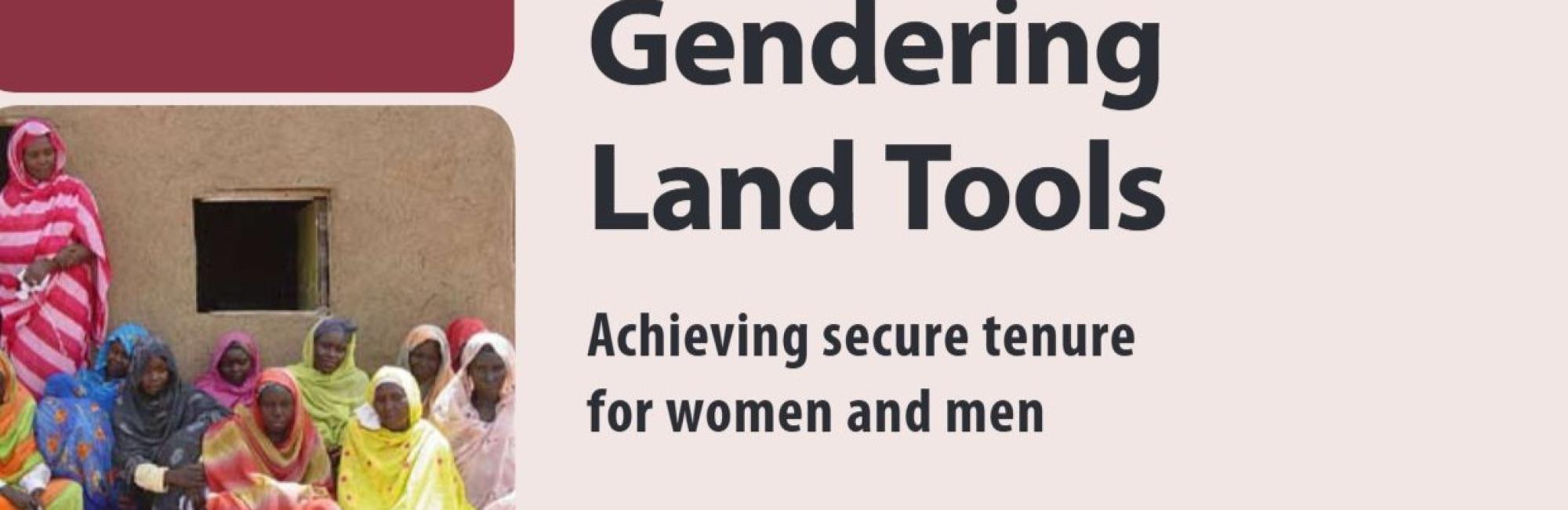
This publication outlines methodologies and strategies for systematically developing land tools that are responsive to both women and men’s needs. Equal property rights for women and men are fundamental to social and economic gender equality. However, women often face discrimination in formal, informal and customary systems of land tenure.
Around the world, women encounter barriers of social customs or patriarchal tenure systems which prevent them from obtaining and holding the same rights as men to land. This report provides a conceptual outline answering questions such as why gender responsive land tools are necessary. The second part provides an overview of the components required for large scale gender responsive tool development. The third part deals with strategies necessary for the implementation of this mechanism.
Taken together, these aspects define how the GLTN Gender Mechanism operates. The report will assist programme planners and decision makers at different levels of the land sector - with or without gender expertise - in identifying practical ways to make land tools more effective for both women and men.
Women’s Land Rights (WLRs) are fundamental human rights, foundational to gender equality and women’s dignity and instrumental in improving food security, effective climate action, poverty eradicati
This publication presents a summary of UN-Habitat’s gender equality impact over the past five years, in line with the Beijing reporting cycle.
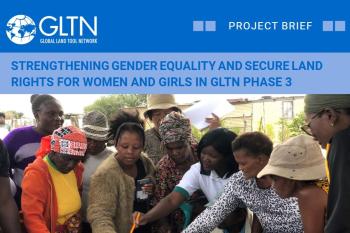
GLTN’s institutional commitment to gender equality and secure land rights for women and girls has been at the core of its work since inception in 2006.