Read More
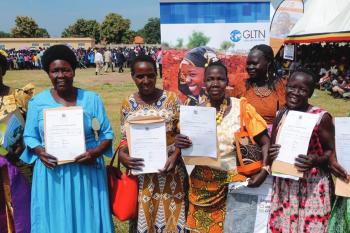
Gender Strategy for Land-at-Scale Uganda
Women’s Land Rights (WLRs) are fundamental human rights, foundational to gender equality and women’s dignity and instrumental in improving food security, effective climate action, poverty eradicati
Information on people-to-land relationships that is documented in a land administration system is crucial to any recovery from a natural disaster. Fit-For- Purpose Land Administration (FFP LA), with special attention given to the poor and vulnerable communities in disaster risk management, plays an important role in the recognition of human rights by the governments and local communities before, during and post disaster. This would serve to create resilience of the people affected and to prepare for, mitigate and respond to natural disasters more proactively.
This Report is a summarized documentation of the application of FFP LA in a post disaster context in Dolakha District of Nepal, undertaken by Kadaster and the Global Land Tool Network (GLTN), in partnership with the Human Rights Awareness and Development Centre (HURADEC) and the UN-Habitat, Nepal Country Office. It presents findings aimed at improved earthquake recovery and resilience, specifically for affected communities in four villages in the Dolakha District in Nepal.
In this undertaking, land tools developed by the GLTN partners were implemented within the framework of the Voluntary Guidelines on the Responsible Governance of Tenure of Land, Fisheries and Forests, the Sustainable Development Goals, the New Urban Agenda and the Sendai Framework for Disaster Risk Reduction in a post-disaster environment.
Women’s Land Rights (WLRs) are fundamental human rights, foundational to gender equality and women’s dignity and instrumental in improving food security, effective climate action, poverty eradicati
This publication presents a summary of UN-Habitat’s gender equality impact over the past five years, in line with the Beijing reporting cycle.
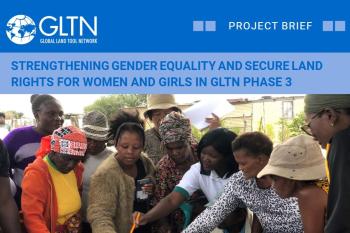
GLTN’s institutional commitment to gender equality and secure land rights for women and girls has been at the core of its work since inception in 2006.