Read More
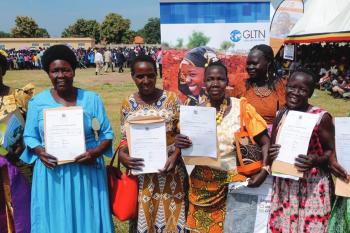
Gender Strategy for Land-at-Scale Uganda
Women’s Land Rights (WLRs) are fundamental human rights, foundational to gender equality and women’s dignity and instrumental in improving food security, effective climate action, poverty eradicati
This report summarizes a case study of the Mexican ejido community tenure system. Mexico was selected for this case study because of the rich history and extensive scale of the country’s community land tenure and registration systems. This community system covers 52% of the area of Mexico, roughly equivalent to the size of Egypt, and comprises over 30 000 communities.
The ejido system emanated from the Mexican revolution (1910-1917) and represents a case where the customary system of land has been largely integrated into the statutory system. The case study is particularly relevant to countries which are trying to accommodate customary land systems within a formal land registration system.
Women’s Land Rights (WLRs) are fundamental human rights, foundational to gender equality and women’s dignity and instrumental in improving food security, effective climate action, poverty eradicati
This publication presents a summary of UN-Habitat’s gender equality impact over the past five years, in line with the Beijing reporting cycle.
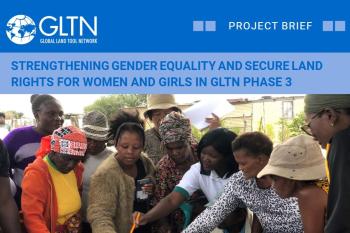
GLTN’s institutional commitment to gender equality and secure land rights for women and girls has been at the core of its work since inception in 2006.